A World-Class Collection
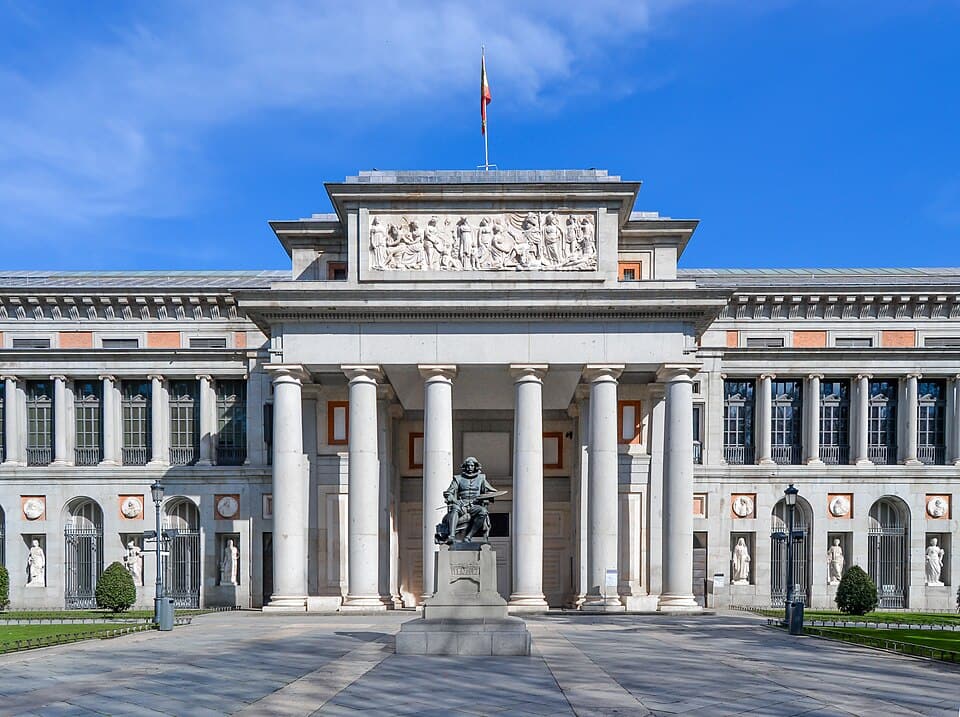
The Museo Nacional del Prado, founded in 1819, houses over 8,000 paintings and 700 sculptures spanning eight centuries of European art, with particular strengths in the Spanish, Italian, and Flemish schools that reflect the vast artistic patronage of the Spanish Crown. The collection includes what many consider the single greatest painting in Western art, Velazquez's Las Meninas, a revolutionary work of perspective and psychological depth that has fascinated artists and scholars for nearly four centuries. Goya is represented with extraordinary depth, from his luminous early tapestry cartoons through the haunting Black Paintings of his final years, including the nightmarish Saturn Devouring His Son. The museum also holds El Greco's mystical religious visions, Hieronymus Bosch's surreal Garden of Earthly Delights triptych, and masterpieces by Titian, Rubens, and Raphael.
Spanish Masters
The Prado's collection of Spanish painting is unmatched anywhere in the world, offering a comprehensive journey through the golden age and beyond of one of Europe's most distinctive artistic traditions. Velazquez's gallery includes not only Las Meninas but also The Surrender of Breda, The Spinners, and a series of portraits of the Spanish royal court that represent the absolute pinnacle of European portrait painting. El Greco's elongated, ecstatically colored figures, including The Nobleman with his Hand on his Chest and The Holy Trinity, showcase the visionary mysticism that made him one of the most original painters who ever lived. Goya's comprehensive representation spans his entire career, from court painter to tormented visionary, and the Black Paintings gallery, where fourteen murals painted directly onto the walls of his house have been transferred to canvas, is one of the most intense and unsettling museum experiences in the world.
Planning Your Visit
The Prado's vast collection can be overwhelming, so first-time visitors are advised to focus on the museum's greatest hits or join a guided tour that provides structure and context for the most important works. The museum is located on Madrid's Paseo del Arte, a tree-lined boulevard that also houses the Thyssen-Bornemisza and Reina Sofia museums, making it possible to visit all three in a single culturally intensive day. Free evening entry is extremely popular and queues can be long, so arriving early during paid hours often provides a more comfortable viewing experience. The museum's excellent audio guide, available in multiple languages, offers detailed commentary on key works and is well worth the small additional cost for visitors exploring on their own.